

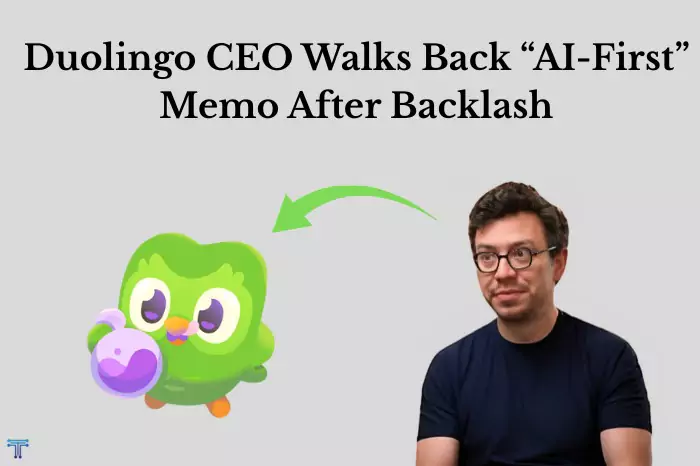
When Duolingo CEO Luis von Ahn announced earlier this year that the company would become “AI-first,” the move was meant to signal bold innovation. Instead, it sparked weeks of public criticism, with users and employees fearing automation would replace people at the world’s most popular language-learning app.
In an April memo, von Ahn outlined plans to integrate artificial intelligence into nearly every aspect of operations, from course development to hiring and even performance reviews. Contractors, he suggested, would be gradually phased out as AI could take on tasks once handled by people. This shows a larger trend you see in many industries. Companies are trying to use AI in their apps to make work easier and save money.
The response was swift. On Reddit, TikTok, and X, longtime users accused Duolingo of prioritizing growth over quality. Some dropped the app entirely, citing AI-generated errors in lessons — particularly in smaller language courses such as Irish and Japanese. Critics warned the company was undermining the very human expertise that gave its lessons credibility.
By May, von Ahn acknowledged he had mishandled the rollout. “I didn’t do that well,” he said in a follow-up post, stressing that the company is “continuing to hire at the same speed as before” and that AI is intended to support staff, not eliminate them. He later described the shift as a “mind shift,” urging employees to use AI as a tool to shed repetitive work and focus on creative and strategic projects.
Despite the backlash, Duolingo has already seen results from its AI push. The company rolled out 148 new language courses in the past year — a milestone that once took over a decade to reach. Analysts say AI is accelerating production while reducing costs, even as users question whether quality is keeping pace.
Financial markets appear to back the strategy. Earlier this month, Duolingo raised its 2025 revenue forecast to between $1.01 billion and $1.02 billion, topping Wall Street expectations. Daily active users climbed 40% year over year, though growth slowed compared to earlier peaks. Shares jumped more than 20% following the earnings release.
Von Ahn maintains the controversy reflects miscommunication, not mismanagement. In a recent interview, he insisted that “internally, this was not controversial,” and pointed to new initiatives such as “FRAI-days,” weekly sessions where staff experiment with AI tools in a hands-on way.
For Duolingo, the episode underscores a challenge facing many tech companies: how to embrace automation without alienating the people who make and use their products. As von Ahn put it, “AI should accelerate what we do — not replace the humans behind it.”